Evolving Mercantile Law in Pakistan: A Modern Transformation of Commercial Legal Systems

Updated: Oct 1

Introduction to Mercantile Law in Pakistan
Mercantile law in Pakistan is the foundation of the country’s commercial and business environment. It governs contracts, corporate behavior, trade transactions, banking operations, partnerships, insolvency matters, and commercial dispute resolution. In simple terms, it defines the legal “rules of the game” for businesses operating within Pakistan. Over time, this legal framework has evolved significantly due to economic reforms, globalization, technological advancements, and increasing complexity in trade practices. Today, mercantile law is no longer a static colonial inheritance but a dynamic system continuously adapting to modern commercial realities.
Historical Evolution and Colonial Legal Legacy
The roots of mercantile law in Pakistan can be traced back to British India, where most commercial statutes were introduced by the colonial administration. After independence in 1947, Pakistan retained these laws almost entirely, including the Contract Act 1872, Negotiable Instruments Act 1881, and Sale of Goods Act 1930. Initially, this legal inheritance provided stability and continuity in commercial affairs.
However, as Pakistan’s economy expanded, the limitations of these outdated frameworks became visible. The inherited laws were designed for a simple trade-based economy, not for today’s digital, financial, and globally integrated market systems. This gap gradually pushed lawmakers and courts toward reinterpretation, modification, and partial reform of mercantile laws to meet modern economic demands.
Constitutional and Institutional Framework of Commercial Law
Pakistan’s mercantile legal system operates within a broader constitutional and institutional structure. While the Constitution of Pakistan does not directly define commercial law, it provides essential protections such as the right to conduct business, property rights, and equality before law, which indirectly support trade and commerce.
Several key institutions regulate mercantile law in Pakistan, including the Securities and Exchange Commission of Pakistan (SECP), State Bank of Pakistan (SBP), Federal Board of Revenue (FBR), and Competition Commission of Pakistan (CCP). These bodies ensure compliance, regulate financial markets, and maintain fair competition within the business environment.
Together, these institutions create a multi-layered regulatory framework that governs corporate operations, taxation, banking systems, and investment activities.
Modern Legislative Reforms in Mercantile Law
One of the most significant developments in recent years has been the modernization of corporate and commercial laws. The Companies Act 2017 replaced the Companies Ordinance 1984, introducing improved corporate governance standards, digital filing systems, and stronger accountability mechanisms.
The introduction of electronic company registration, online compliance systems, and enhanced reporting requirements has significantly reduced administrative burdens for businesses. Additionally, reforms in banking laws, anti-money laundering regulations, and financial compliance frameworks have strengthened Pakistan’s commercial legal environment.
Despite these improvements, continuous legislative updates are required to keep pace with rapidly changing global business practices, especially in fintech, digital trade, and cryptocurrency regulation.
Role of Judiciary in Commercial Legal Development
The judiciary plays a vital role in shaping mercantile law in Pakistan through interpretation and precedent-setting judgments. Courts often fill legislative gaps by expanding legal principles related to contracts, corporate governance, fraud prevention, and commercial liability.
For example, Pakistani courts have consistently emphasized the principle of “good faith” in contractual obligations and strengthened protections for minority shareholders in corporate disputes. Banking courts and commercial benches have also been established to expedite financial litigation, although delays still remain a significant challenge.
Judicial interpretation continues to act as a driving force in the evolution of mercantile law, especially in areas where legislation is outdated or silent.
Commercial Dispute Resolution and Arbitration System
Efficient dispute resolution is essential for a strong mercantile system. In Pakistan, traditional court litigation is often slow and time-consuming, which has led to the increasing importance of alternative dispute resolution (ADR) mechanisms.
Arbitration, mediation, and conciliation are now widely encouraged in commercial contracts. The Arbitration Act provides a legal framework for resolving disputes outside court, allowing businesses to save time and costs while maintaining confidentiality.
International arbitration is also gaining importance, particularly in foreign investment contracts and cross-border trade disputes. However, enforcement of arbitration awards remains inconsistent, limiting the effectiveness of ADR systems.
Impact of Globalization on Mercantile Law
Globalization has profoundly influenced Pakistan’s commercial legal environment. Increasing foreign investment, international trade agreements, and participation in global financial markets have required Pakistan to align its laws with international standards.
Organizations such as the World Trade Organization (WTO) have encouraged reforms in trade regulations, intellectual property rights, and investment protection laws. These changes aim to create a more transparent and predictable business environment.
However, challenges remain in ensuring consistent enforcement, reducing bureaucratic delays, and improving investor confidence. Many foreign investors still perceive legal uncertainty as a major risk factor in Pakistan’s business climate.
Digital Economy and E-Commerce Legal Transformation
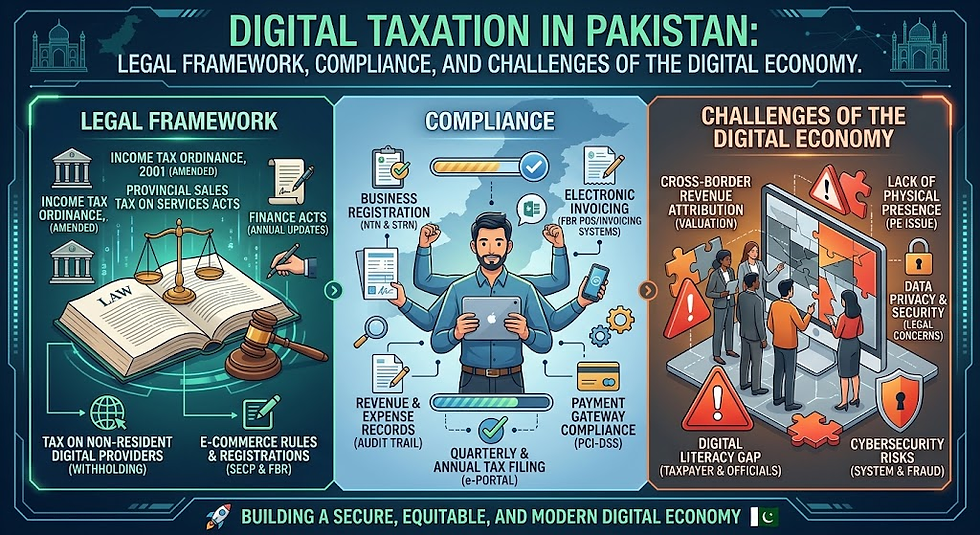
The rise of the digital economy has created new legal challenges for mercantile law in Pakistan. E-commerce platforms, online financial services, digital payment systems, and fintech startups have transformed traditional commercial models.
Existing laws were not originally designed for digital transactions, leading to gaps in regulation related to electronic contracts, cybersecurity, data protection, and online fraud. Although cybercrime laws and digital transaction frameworks exist, enforcement remains weak and awareness is limited.
Pakistan’s commercial legal system must now evolve to formally recognize digital signatures, smart contracts, blockchain-based transactions, and cross-border online trade mechanisms to ensure legal certainty in the digital marketplace.
Corporate Governance and Business Regulation
Strong corporate governance is essential for economic stability and investor trust. The Companies Act 2017 introduced significant reforms in corporate accountability, auditing standards, and disclosure requirements.
The Securities and Exchange Commission of Pakistan (SECP) plays a central role in regulating listed companies, ensuring transparency, and protecting shareholder rights. These reforms have improved Pakistan’s ranking in ease of doing business indices, though challenges persist in enforcement and compliance culture.
Small and medium enterprises (SMEs), which form the backbone of Pakistan’s economy, often struggle with regulatory compliance due to lack of awareness and limited resources.
Banking, Finance, and Mercantile Integration
Mercantile law is closely linked with Pakistan’s banking and financial systems. The State Bank of Pakistan regulates monetary policy, credit systems, and banking operations, while commercial laws govern financial instruments such as cheques, promissory notes, and bills of exchange.
Islamic banking has also gained significant importance, introducing Sharia-compliant financial products that operate alongside conventional banking systems. This dual structure adds complexity but also expands financial inclusion.
Despite regulatory improvements, issues such as loan defaults, non-performing loans, and financial fraud continue to challenge the effectiveness of banking-related mercantile laws.
Intellectual Property and Commercial Protection
In the modern business environment, intellectual property (IP) law has become a critical component of mercantile law. Pakistan has made progress in strengthening IP protection through trademarks, copyrights, and patent laws.
The Intellectual Property Organization of Pakistan (IPO-Pakistan) plays a key role in protecting innovation and creative works. However, enforcement remains weak, and piracy continues to be a major issue affecting both local and international businesses.
Strong IP protection is essential for encouraging innovation, attracting foreign investment, and supporting knowledge-based industries.
Challenges in Mercantile Law Implementation
Despite significant progress, several challenges hinder the effective implementation of mercantile law in Pakistan. Judicial delays remain one of the biggest issues, causing uncertainty and financial losses for businesses.
Other challenges include inconsistent enforcement across provinces, outdated legal provisions in certain sectors, corruption, limited digital infrastructure in courts, and lack of legal awareness among small businesses.
These issues collectively reduce investor confidence and slow down economic growth, making legal reform a continuous necessity.
Future Prospects and Legal Reforms
The future of mercantile law in Pakistan depends on comprehensive modernization and digital transformation. Introducing e-courts, AI-based case management systems, and online dispute resolution platforms can significantly improve efficiency.
There is also a strong need to update commercial laws to cover emerging areas such as artificial intelligence, blockchain, fintech, and data protection. Strengthening corporate governance frameworks and improving regulatory coordination between institutions will further enhance economic stability.
Legal education and awareness campaigns for entrepreneurs and SMEs can also bridge the gap between law and practice, ensuring better compliance and smoother business operations.
Conclusion
Mercantile law in Pakistan is undergoing continuous transformation driven by historical evolution, globalization, technological innovation, and economic reform. While the legal framework has significantly improved through corporate governance reforms, institutional strengthening, and judicial interpretation, challenges such as enforcement gaps, outdated statutes, and procedural delays still exist. The future of mercantile law lies in comprehensive modernization, digital integration, and stronger institutional efficiency. With sustained reforms and global alignment, Pakistan’s commercial legal system has the potential to become a powerful engine for economic growth, investor confidence, and sustainable business development.