
Pasban Law College: A Practical Legal Training Course That Transforms Aspiring Lawyers into Courtroom-Ready Professionals
- Fahad ali
- Mar 20
- 14 min read
Updated: May 5
How Faisalabad's Premier Law Institution Is Redefining Legal Education in Pakistan
In a legal landscape that is rapidly evolving, the demand for lawyers who are not only academically sound but also practically prepared has never been greater. Law firms, courts, and corporate legal departments across Pakistan are actively seeking graduates who can step into professional roles from day one individuals who understand not just the letter of the law, but how to apply it in real courtrooms, real negotiations, and real client interactions. This is precisely the gap that Pasban Law College (PLC) in Faisalabad has set out to close.
Situated at 36-C People's Colony No. 1, near D-Ground, Faisalabad, Pasban Law College has earned a well-deserved reputation as one of the finest institutions for legal education in Punjab. Affiliated with the University of the Punjab one of Pakistan's most prestigious and oldest public universities PLC offers a rigorous LL.B. (4-Year Programme) that seamlessly blends theoretical legal scholarship with a comprehensive practical legal training course designed to produce court-ready, confident, and ethically grounded legal professionals.
This article explores everything prospective students, parents, and legal enthusiasts need to know about Pasban Law College its history, leadership, academic programmes, practical training infrastructure, campus facilities, career outcomes, and why it stands apart as the destination of choice for serious law aspirants in Faisalabad and beyond.
1. The Foundation and Vision of Pasban Law College
Pasban Law College was founded with a singular, purposeful mission: to provide quality legal education that bridges the traditional gap between academic theory and real-world legal practice. The institution's leadership recognised early on that legal education in Pakistan, much like in many parts of the developing world, often suffered from an overemphasis on rote learning and statutory memorisation at the expense of practical skill-building. PLC was designed from the ground up to correct this imbalance.
The Patron-in-Chief of Pasban Law College, Major Shah Nawaz Ul Hassan (Retd.), brings a background of discipline, leadership, and institutional development to the college. Also the Chairman of the Pasban IT Group and founder of Pasban Technical Training Center, Major Hassan's philosophy is reflected in PLC's culture: structured, results-oriented, and deeply committed to student development. His vision for the college is one where education extends beyond classroom walls and into society, producing graduates who are not just lawyers but community leaders and justice advocates.
Complementing this leadership is the Director of PLC, Barrister Mian Muhammad Shafiq Ahmed a distinguished legal professional who holds an LL.M. from Bedfordshire University, UK, and is a Barrister-at-Law from Lincoln's Inn, one of the world's most prestigious legal institutions. His published work with the International Bar Association on the rule of law and human rights in Pakistan signals the calibre of thought leadership that guides the college. Under his directorship, Pasban Law College has evolved into an institution that holds its curriculum and faculty to genuinely international standards, while remaining firmly rooted in the practical realities of Pakistani law and jurisprudence.
PLC's vision statement articulates an aspiration to be nationally and internationally recognised known for ethical values, quality teaching, and a transformative student experience. The college aims to develop legal, logical, and ethical youth who can benefit society, producing well-rounded professionals with competence, character, and community awareness.
2. The LL.B. Programme: A Rigorous Academic Foundation
At the core of Pasban Law College's academic offering is the LL.B. (4-Year Programme), affiliated with the University of the Punjab. This degree is structured under a semester system, ensuring regular assessment, academic discipline, and progressive learning across eight semesters. The curriculum has been carefully designed to align with both the Bar Council requirements for legal practice in Pakistan and contemporary standards in international legal education.
The programme covers ten areas of legal specialisation, giving students a broad exposure to the full spectrum of Pakistani law. These include constitutional law, criminal law, civil law, family law, commercial and corporate law, labour law, international law, administrative law, land and property law, and human rights law. Each subject is taught with a dual focus: understanding the legal framework as codified in statutes and precedents, and understanding how those laws operate in actual courtrooms and legal proceedings.
The faculty at PLC composed of experienced practicing lawyers, senior advocates, and academic scholars brings this duality to life in every lecture. Teaching methods go beyond textbook reading. Students engage in Socratic dialogue, case analysis, statutory interpretation exercises, and problem-based learning scenarios that mirror real legal situations. The result is a student body that enters the job market not merely knowing the law, but knowing how to practise it.
3. The Practical Legal Training Course: The Heart of PLC's Education
If there is one dimension of Pasban Law College that sets it apart most clearly from many other law colleges in Punjab, it is the depth and seriousness of its practical legal training course. At PLC, practical training is not an optional add-on or a checkbox exercise — it is embedded in the fabric of the educational experience and given equal weight alongside academic learning.

3.1 Moot Court Programme
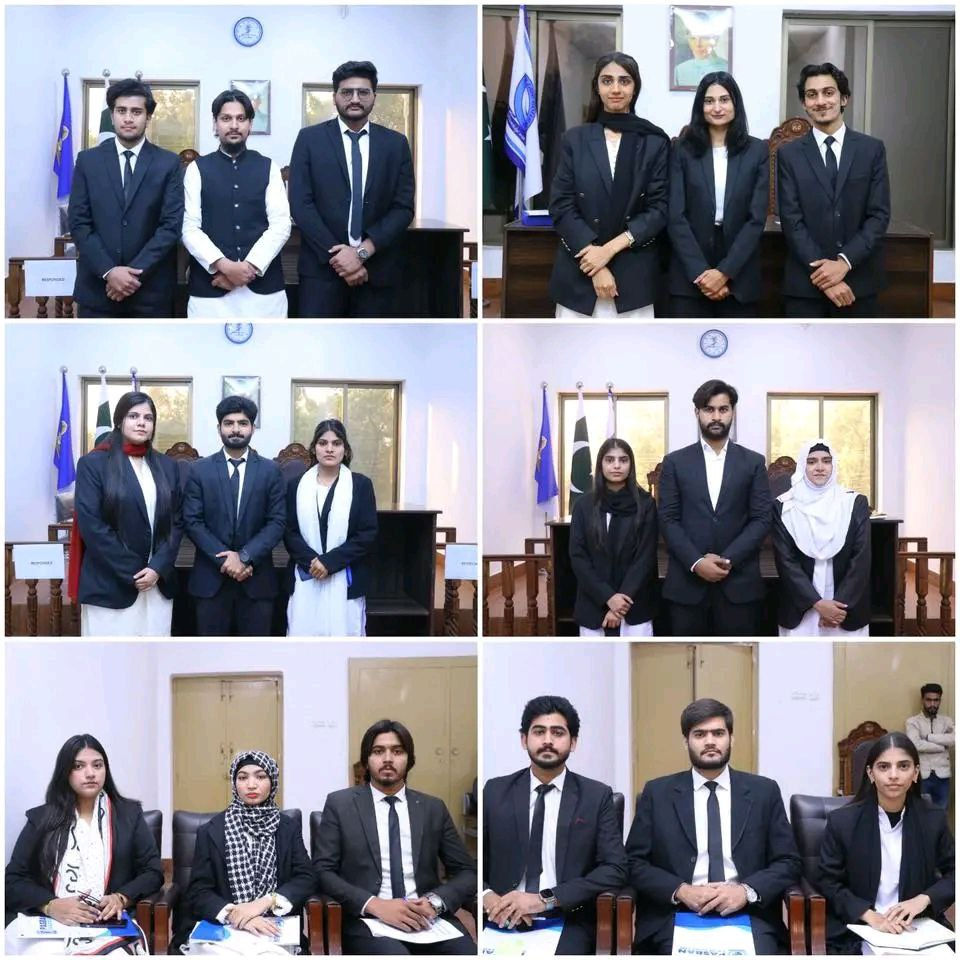
The Mooting Club at Pasban Law College is one of its most celebrated practical learning environments. Moot court competitions simulate real appellate proceedings, requiring students to research legal issues, prepare written submissions, and present oral arguments before panels of judges typically composed of faculty members, visiting senior advocates, or retired judges.
Through moot court participation, students develop a range of critical skills that cannot be taught through lectures alone. They learn to construct legal arguments from first principles, identify weaknesses in their opponents' positions, manage courtroom demeanour, respond to challenging questions under pressure, and craft persuasive written legal briefs. These are the exact same skills they will need when they eventually stand before real judges in the district courts, high courts, and beyond.
PLC's Mooting Club provides a safe, structured, and supervised environment for students to make mistakes, receive feedback, and improve a process that is essential to professional growth but rarely possible in actual courtroom settings. Students who participate actively in moot courts consistently report that the experience gave them confidence and practical competence far beyond what classroom study alone could provide.
3.2 Legal Internship Programme
Pasban Law College maintains active partnerships with over 30 legal clinics and internship partners across Faisalabad and the surrounding region. Through these partnerships, students are placed in law firms, chambers of senior advocates, district courts, and legal aid organisations to gain hands-on exposure to the daily workings of the legal profession.
During internships, students shadow practicing lawyers, observe court proceedings, assist with legal research and document drafting, attend client meetings, and participate in case preparation. This direct exposure to the professional environment is invaluable. It familiarises students with legal workflows, professional norms, client communication, and the procedural realities of the Pakistani judicial system knowledge that simply cannot be acquired from a textbook.
The internship component of PLC's practical legal training course also serves an important career networking function. Students who distinguish themselves during their placements often receive job offers or ongoing mentorship from the legal professionals with whom they work. The college's 95% job placement rate is, in no small part, a direct reflection of the professional relationships built during these practical training experiences.
3.3 Legal Research and Writing
Effective lawyering begins with effective legal research. Pasban Law College's practical legal training course places significant emphasis on developing strong legal research and writing skills. Students are trained to navigate legal databases, locate relevant case law, analyse statutory materials, and synthesise information from multiple sources into coherent, well-reasoned legal arguments.
Legal writing workshops teach students how to draft a range of professional legal documents from client advice letters and legal opinions to pleadings, affidavits, contracts, and applications. Attention is paid not just to accuracy but to clarity, precision, and the conventions of formal legal language. The ability to produce well-drafted legal documents is a foundational professional skill, and PLC ensures that graduates are fully competent in this area before they enter practice.
3.4 Academic Seminars and Guest Speaker Series
As part of its commitment to practical legal training, Pasban Law College regularly organises academic seminars, workshops, and guest speaker sessions that bring students into direct contact with leading practitioners and thought leaders from Pakistan's legal community. These events cover a wide range of topics from emerging areas of law such as cybercrime and intellectual property, to broader professional development themes like legal ethics, career planning, and business development for lawyers.
Guest speakers have included senior advocates, retired judges, corporate counsel from major companies, representatives from international organisations, and legal academics from Pakistan's top universities. Exposure to these perspectives helps students develop a sophisticated, multi-dimensional understanding of the legal profession and the varied career pathways available to them as LL.B. graduates.
3.5 Legal Awareness Campaigns
PLC also actively engages students in legal awareness campaigns and community outreach activities. These initiatives serve a dual purpose: they allow students to apply their knowledge in practical, public-facing contexts, and they reinforce PLC's institutional commitment to using legal education as a tool for social progress. Students learn firsthand how law intersects with everyday life for ordinary citizens and they develop a sense of professional responsibility toward making legal justice accessible and understandable to all.
4. Campus Facilities That Support Practical Learning
A practical legal training course is only as effective as the environment in which it takes place. Pasban Law College has invested in a modern campus infrastructure that actively supports and enhances the practical dimension of its educational programme.
4.1 The Mooting Club
PLC's dedicated Mooting Club facility is purpose-built to simulate the experience of a real courtroom. Equipped with appropriate furniture, acoustic considerations, and visual aids, the space provides a credible and professional setting for moot court competitions and practice sessions. Having a dedicated facility rather than repurposing a classroom signals the institution's genuine commitment to moot court as a central pillar of its practical legal training course.

4.2 The College Library
Legal education is fundamentally research-intensive, and PLC's well-stocked college library reflects this reality. The library houses a comprehensive collection of legal texts, including statutes, legal commentaries, case reporters, law journals, and reference works covering all major areas of Pakistani and international law. Students engaged in the practical legal training course rely heavily on library resources for case preparation, moot court research, and academic assignments.
The availability of a quality legal library within the campus ensures that students can conduct their research in a focused, professional environment without having to travel to external facilities. Access to up-to-date legal materials is essential for practical training activities, and PLC's library serves as the research backbone of the entire educational programme.
4.3 Computer Lab
The college's computer lab provides students with access to digital legal research tools, legal databases, word processing software, and internet connectivity. In the modern era, legal research is conducted online as much as in physical libraries, and the ability to navigate digital resources including case law databases, government legal portals, and international legal databases is an essential skill for any practising lawyer. PLC's computer lab ensures that students receive training in digital legal research as part of their comprehensive practical training experience.
4.4 Other Campus Amenities
Beyond the core academic and practical learning facilities, PLC offers a range of campus amenities that contribute to student wellbeing and community life. These include a prayer room reflecting the college's respect for the spiritual dimension of student life a cafeteria offering a comfortable space for students to socialise and recharge, and a sports club with a remarkable 120% athletic participation rate that speaks to the vibrant extracurricular culture at the college. A healthy, well-rounded student body makes for a more engaged, resilient, and effective learner and PLC's investment in campus life reflects an understanding of this connection.

5. LAT Preparation: A Gateway Into Legal Education
For students who are preparing to enter law college, Pasban Law College offers dedicated LAT (Law Admission Test) preparation classes. The LAT is a mandatory entry examination for LL.B. programmes across Pakistan, and many students find it challenging due to its range of analytical, verbal, and general knowledge components.
PLC's LAT preparation programme provides structured coaching designed to help aspiring law students achieve competitive scores and secure admission to their desired programmes. The classes cover all components of the LAT including logical reasoning, English language proficiency, Pakistan studies, and general knowledge and are taught by faculty members with expertise in the exam's content and format.
By offering LAT preparation alongside its LL.B. programme, PLC positions itself as a comprehensive legal education institution one that supports students from the very first step of their legal career journey through to graduation and professional practice. This holistic approach to student support is one of the hallmarks of PLC's educational philosophy.
6. The Admission Process and Eligibility
Admission to Pasban Law College's LL.B. programme is conducted in accordance with the regulations set by the University of the Punjab and the Higher Education Commission (HEC) of Pakistan. Prospective students are required to have completed their intermediate education (12 years of schooling) or equivalent, and must have passed the Law Admission Test (LAT) administered by the HEC.
PLC publishes an annual admission prospectus the Prospectus 2026 is currently available which provides detailed information on eligibility criteria, required documents, fee structure, application procedures, and important dates. Prospective students are encouraged to review the prospectus carefully and to contact the college directly for personalised guidance on their application.
The college prides itself on creating an inclusive and accessible admissions process. Staff are available via phone, WhatsApp, and email to assist prospective students and their families with questions about the programme, facilities, and career pathways. The college's physical location near D-Ground in People's Colony is accessible from various parts of Faisalabad, making it a convenient choice for local students.
7. Career Outcomes and Professional Success
The ultimate measure of any educational institution is the professional success of its graduates, and Pasban Law College's outcomes data tells a compelling story. With a 95% job placement rate, an 88% bar exam pass rate, and strong alumni presence across Faisalabad's legal community, PLC's track record speaks for itself.
Graduates of PLC go on to careers across the full spectrum of the legal profession. Many join litigation practice first as juniors in the chambers of senior advocates, then building their own independent practices at the district courts, Lahore High Court, and beyond. Others enter corporate legal departments, working as in-house counsel for companies in sectors ranging from manufacturing and textiles (Faisalabad's traditional industrial strengths) to banking, real estate, and technology.
A growing number of PLC graduates are pursuing postgraduate legal education obtaining LL.M. degrees from universities in Pakistan or abroad before returning to practice or entering academia. The strong academic foundation and practical skills built at PLC make its graduates highly competitive candidates for top postgraduate programmes.
Others have entered public service joining the judiciary as civil judges, working with government legal departments, or contributing to legal aid and access to justice organisations. PLC's emphasis on ethical values, social responsibility, and community engagement produces graduates who are not merely interested in professional advancement, but in using their legal expertise to make a tangible positive difference in Pakistani society.
8. PLC's Connection to Mian Law Chambers

One of the more distinctive features of Pasban Law College's ecosystem is its connection to Mian Law Chambers, located at 74 District Courts, Faisalabad. This relationship between an academic institution and an active legal practice provides PLC students with a uniquely direct pipeline to professional legal experience.
The chambers, headed by Barrister Mian Muhammad Shafiq Ahmed himself, provides opportunities for internships, mentorship, and observation of real legal proceedings at the district court level. For students who are eager to see how their academic learning translates into actual practice, this connection is invaluable. It also reinforces the culture of seriousness and professionalism that characterises the PLC learning environment students see, in real time, the standard to which they aspire.
This institutional bridge between law college and law chambers is a model of practical legal education integration that few institutions in Pakistan can match. It transforms the practical legal training course from a structured academic exercise into a genuine apprenticeship experience, directly supervised by practitioners of the highest calibre.
9. Ethical Values and Professional Character Development
Technical legal skill is necessary but not sufficient for a successful legal career. The Pakistani legal profession and the broader society it serves demands lawyers of integrity: professionals who can be trusted by clients, respected by courts, and relied upon to uphold the rule of law even under pressure. Pasban Law College takes this dimension of legal education with the utmost seriousness.
Professional ethics and legal responsibility are woven into the curriculum at multiple levels. Students study legal ethics as a formal subject, exploring the Pakistan Bar Council's code of professional conduct, the duties of advocates to clients and courts, conflicts of interest, confidentiality obligations, and the broader responsibilities of the legal profession in a democratic society.
Beyond the classroom, the culture of PLC itself reinforces ethical development. The college's leadership model of respect, discipline, and service provides students with daily examples of professional conduct. The emphasis on community engagement and legal awareness activities reminds students that legal expertise is a public trust, a privilege to be exercised with humility and a genuine commitment to justice.
PLC also fosters personality development and spiritual values, recognising that character and conduct are as important to professional success as knowledge and skill. The prayer room on campus, the emphasis on teamwork and collaboration, and the college's culture of mutual respect all contribute to an environment where ethical development happens naturally and continuously.
10. Why Pasban Law College Is the Right Choice for Your Legal Career
For students who are serious about building a successful and meaningful legal career, the choice of law college is one of the most consequential decisions they will make. It determines not just the quality of their academic training, but the professional networks they build, the practical skills they develop, and the values they carry into their careers. By this measure, Pasban Law College stands as one of the most well-rounded, professionally oriented, and rigorously managed law colleges in Faisalabad and arguably among the best in Punjab.
Here is a summary of what makes PLC the right choice:
• Punjab University affiliation: Academic credibility, recognised degree, and a structured curriculum that meets national standards.
• Practical legal training course: Moot courts, internships, legal research workshops, and community engagement activities that produce court-ready graduates.
• Internationally connected leadership: Direction from a Barrister of Lincoln's Inn with published work in the International Bar Association.
• 30+ internship and clinic partners: A wide professional network that opens doors to employment opportunities.
• 88% bar exam pass rate: Strong academic preparation that translates into professional qualification success.
• 95% job placement rate: Exceptional career outcomes driven by practical training and professional networking.
• Modern campus facilities: Library, computer lab, mooting club, prayer room, cafeteria, and sports club.
• LAT preparation support: Guidance from the very first step of the legal education journey.
• Ethical and holistic education: A culture that builds character, confidence, and community responsibility alongside legal expertise.
• Connection to active legal chambers: A direct pipeline to real-world practice through Mian Law Chambers at Faisalabad District Courts.
11. The Future of Practical Legal Training at Pasban Law College
As Pakistan's legal landscape continues to evolve with increasing complexity in commercial law, growing demands for human rights advocacy, expanding digital governance challenges, and deepening engagement with international legal frameworks the importance of practical legal training will only increase. Lawyers of the future will need to be not just knowledgeable, but adaptable, technologically literate, globally aware, and deeply grounded in ethical practice.
Pasban Law College is well-positioned to meet this challenge. Its leadership, under the vision of Major Shah Nawaz Ul Hassan and the professional direction of Barrister Shafiq Ahmed, has demonstrated a consistent commitment to evolution and improvement. The practical legal training course at PLC is regularly reviewed and updated to reflect the changing demands of the profession, incorporating new subject areas, new methodologies, and new partnership opportunities as they arise.
The college's digital presence including its comprehensive website, active social media channels on Facebook, Instagram, and YouTube, and accessible WhatsApp contact line reflects an institution that is engaged with the modern world and actively reaching out to the next generation of legal professionals. This openness to communication, feedback, and community engagement is itself a model of the values PLC seeks to instil in its students.
As PLC continues to grow its internship partnerships, expand its mooting programme, deepen its library and research resources, and develop new pathways for student achievement, it is building towards the vision articulated in its founding mission: to be nationally and internationally recognised as an institution that transforms aspiring lawyers into principled, skilled, and socially responsible legal professionals.
Conclusion: A Practical Legal Training Course That Changes Careers
Legal education, at its best, is transformative. It takes young people who are interested in justice and gives them the tools to pursue it professionally, the knowledge, the skills, the ethics, and the professional network to build meaningful careers in the law. Pasban Law College, through its rigorous LL.B. programme and its comprehensive practical legal training course, is doing exactly this for the students of Faisalabad and Punjab.
From the moot courts where students argue their first cases to the internships where they shadow senior advocates at district courts; from the legal research workshops where they learn to draft professional documents to the community campaigns where they put their knowledge to work for the public every dimension of the PLC experience is designed with one goal in mind: producing lawyers who are genuinely ready to practise.
The numbers confirm the approach: 88% bar exam pass rate, 95% job placement, 30+ internship partners, and 10 areas of specialisation. These are not just marketing metrics they are evidence of an institutional commitment to practical excellence that runs through everything Pasban Law College does.
If you are serious about a career in law, if you want a degree that will give you not just a certificate but a genuine competitive advantage in the profession then Pasban Law College's practical legal training course is exactly what you have been looking for.
Contact Pasban Law College
36-C People's Colony No. 1, Near D-Ground, Faisalabad, Pakistan
Phone / WhatsApp: +92-326-8634505
Email: pasbanlawcolleges@gmail.com
Website: www.pasbanlawcollege.com



Comments