
Transferability of Easement Rights Under Property Law: Legal Principles, Limitations, and Practical Implications

Updated: Oct 1
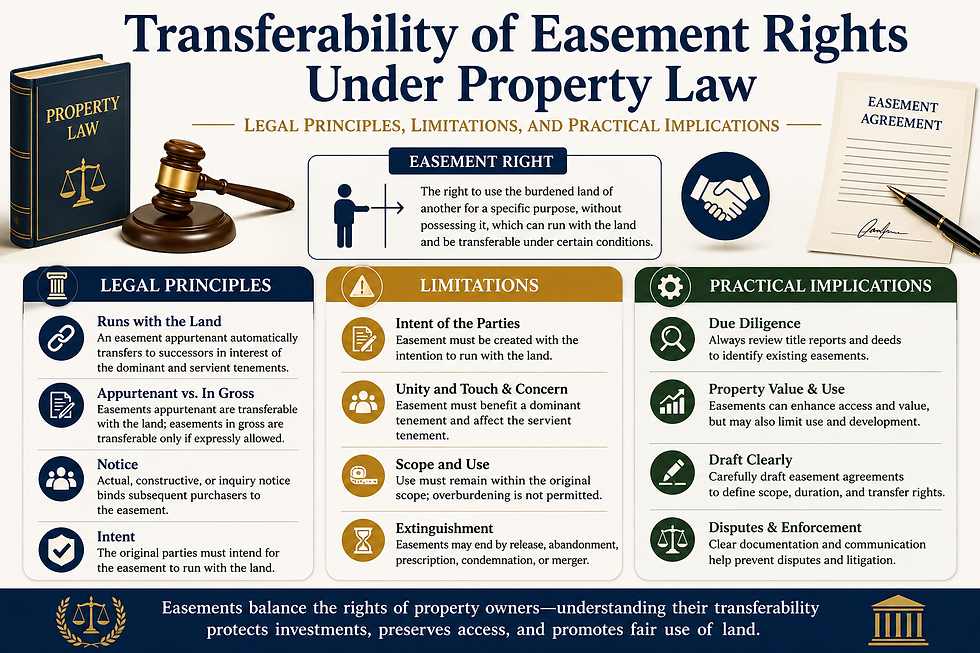
Easement rights are among the most significant concepts in property law because they regulate the use and enjoyment of land owned by another person. One of the most important legal questions surrounding easements is whether these rights can be transferred from one owner to another. The transferability of easement rights directly affects property transactions, land development, inheritance matters, and commercial investments. Understanding how easements transfer under property law is essential for property owners, legal practitioners, developers, and investors.
An easement is generally defined as a legal right enjoyed by one landowner over the land of another for a particular purpose. These rights commonly include rights of way, rights to light and air, drainage rights, water supply rights, and utility access rights. Because easements are closely connected with the beneficial use of land, their transferability often determines the value and practical utility of the property itself.
Meaning and Legal Nature of Easement Rights
An easement is a non-possessory legal interest that grants one person limited use of another person’s property. The property benefiting from the easement is known as the dominant tenement, while the property burdened by the easement is referred to as the servient tenement.
Unlike ownership rights, an easement does not grant possession of land. Instead, it allows limited use for a defined purpose. For example, a property owner may have a legal right to cross neighboring land to access a public road. In such cases, the easement becomes essential for the reasonable enjoyment of the dominant property.
The legal nature of easements distinguishes them from temporary permissions or licenses. Easements are proprietary rights attached to land, which means they usually continue despite changes in ownership. This characteristic forms the basis of their transferability.
Concept of Transferability in Easement Law
Transferability refers to the legal ability of an easement right to pass from one person to another through sale, inheritance, lease, gift, exchange, or any other lawful transfer of property.
In most legal systems, easements are considered transferable because they are attached to the land rather than to an individual owner. Therefore, when the dominant property is transferred, the easement automatically passes to the new owner unless the law or agreement provides otherwise.
This principle ensures continuity in property rights and protects the usefulness of land. Without transferable easements, many properties would lose access to roads, water sources, drainage systems, or essential facilities after a transfer of ownership.
Appurtenant Easements and Automatic Transfer
Most easements are classified as appurtenant easements. An appurtenant easement exists for the benefit of a particular property and automatically transfers with that property whenever ownership changes.
For example, if a landowner enjoys a right of way over neighboring land, the purchaser of that land will normally acquire the same right upon purchase. The easement remains attached to the dominant property regardless of who owns it.
Courts generally presume that parties intend to transfer all rights necessary for the beneficial enjoyment of the property. Therefore, appurtenant easements are treated as an integral part of the land itself.
This automatic transfer is essential in maintaining stability and certainty in property transactions. Buyers often rely on existing easements when deciding whether to purchase property.
Easements in Gross and Their Transferability
Not all easements are attached to land. Some are classified as easements in gross, which are personal rights granted to a specific individual or entity rather than to a dominant property.
Examples include utility easements granted to electricity companies, pipeline operators, or telecommunications providers. These easements benefit organizations rather than neighboring landowners.
Traditionally, personal easements in gross were considered non-transferable because they were closely connected to the specific holder. However, modern legal systems increasingly allow the transfer of commercial easements in gross, especially where infrastructure and public services are involved.
The transferability of easements in gross usually depends on the terms of the agreement creating the easement and the applicable property laws.
Transfer of Easements Through Sale of Property
The most common method of transferring easement rights is through the sale or conveyance of land. When a property benefiting from an easement is sold, the easement generally transfers automatically to the purchaser.
This principle protects the functional utility of the land. For example, if a property relies on an access road crossing neighboring land, the purchaser must receive the benefit of that access right to enjoy the property effectively.
Disputes sometimes arise when property documents fail to mention existing easements. Courts often examine surrounding circumstances, historical usage, maps, and the apparent intentions of the parties to determine whether the easement transferred with the property.
To avoid disputes, property sale agreements should clearly describe all existing easements and their legal status.
Transferability Through Inheritance and Succession
Easement rights commonly pass through inheritance when property transfers to legal heirs. Since appurtenant easements are attached to the land itself, heirs automatically acquire those rights upon succession.
For example, if inherited agricultural land enjoys irrigation or pathway easements, the heirs continue to enjoy those benefits. The death of the original owner does not terminate the easement because the right belongs to the land rather than the individual.
This rule preserves the economic and practical value of inherited property and ensures continuity of land use across generations.
Inheritance disputes regarding easements often arise in family property matters where access routes or shared facilities are unclear. Courts usually rely on historical use, customary practices, and documentary evidence to resolve such conflicts.
Transfer Through Lease Agreements
Tenants and lessees often benefit from easements associated with leased property. When property is leased, the tenant generally acquires the right to use all easements necessary for reasonable enjoyment of the premises.
For example, a tenant leasing a commercial building may use parking areas, utility lines, shared roads, and drainage systems connected to the property.
However, tenants usually cannot independently transfer easement rights because their interest in the property is temporary and derived from the landlord’s ownership rights.
The scope of easement use by tenants depends on the lease agreement and the nature of the easement itself.
Express Transfer of Easement Rights
An express transfer occurs when legal documents specifically mention the easement and clearly transfer it to another party. This method provides maximum legal certainty and reduces the risk of future disputes.
Express easement clauses are commonly included in sale deeds, lease agreements, and property conveyance documents. Such clauses usually identify the location, purpose, scope, and conditions of the easement.
Clear drafting is essential because vague descriptions often lead to litigation regarding the extent or validity of the easement.
Proper registration of express easements also strengthens enforceability against future purchasers.
Implied Transfer of Easements
Sometimes easements transfer even when they are not specifically mentioned in legal documents. This is known as implied transfer.
Courts may imply the existence and transfer of an easement where it is necessary for the beneficial enjoyment of the property or where longstanding use indicates the parties intended the easement to continue.
For example, if landlocked property is sold without express mention of access rights, courts may recognize an implied easement of necessity to prevent the property from becoming unusable.
Implied easements are particularly common in subdivided properties and family inheritance disputes.
Legal Restrictions on the Transferability of Easements
Although most easements are transferable, several legal limitations apply.
Personal easements granted solely for the benefit of an individual may terminate upon death or transfer of ownership. Such rights generally cannot be assigned to third parties.
Similarly, appurtenant easements cannot usually be separated from the dominant property. A landowner cannot transfer the easement independently while retaining ownership of the land because the easement exists for the benefit of that specific property.
The law also prevents misuse or excessive expansion of easement rights after transfer. New owners must use the easement only within the scope originally granted or acquired.
Registration and Documentation of Easement Transfers
Proper documentation and registration play a vital role in protecting transferable easement rights. Registered easements provide public notice and bind future purchasers of the servient property.
Failure to document easements properly can create serious legal disputes during future transactions. Buyers may challenge the validity of unregistered easements, especially if they had no notice of their existence.
Property owners should ensure that all easements are accurately described in title documents, maps, surveys, and sale deeds.
Professional legal drafting helps prevent ambiguity regarding the location, scope, and conditions of easement rights.
Judicial Interpretation of Transferable Easements
Courts generally support the transferability of easements where such rights are necessary for the reasonable use of land. Judicial decisions often focus on fairness, practicality, and the intention of the parties.
Courts frequently presume that continuous and apparent easements pass automatically with the transfer of property unless expressly excluded.
However, courts may refuse enforcement where easements have been abandoned, excessively altered, or unlawfully expanded beyond their original purpose.
Judicial interpretation also distinguishes between transferable property rights and non-transferable personal privileges.
Transferability of Easements Under Pakistani Property Law
In Pakistan, easement rights are mainly governed by the Easements Act, 1882, alongside property law principles and judicial precedents.
Pakistani courts recognize that easements attached to land ordinarily transfer with ownership of the dominant heritage. Rights of way, drainage rights, water access rights, and utility easements frequently become subjects of litigation in both urban and rural property disputes.
Courts in Pakistan generally uphold longstanding easement rights where necessity, continuous use, and documentary evidence are established.
Property purchasers are strongly advised to verify all existing easements before acquiring land. Many legal disputes occur because buyers fail to investigate access rights, shared facilities, or encroachments before completing transactions.
Commercial Significance of Transferable Easements
Transferable easements are essential for modern infrastructure, real estate development, and commercial investment. Roads, utility systems, drainage facilities, pipelines, and telecommunications networks often depend on legally enforceable easement arrangements.
Developers and financial institutions carefully examine easement rights before approving construction projects or property financing. A property without legally transferable access rights may lose substantial market value.
Commercial stability and urban planning rely heavily on secure and transferable easement arrangements.
Common Disputes Regarding Easement Transfers
Numerous disputes arise concerning the transferability of easement rights. Common issues include disagreements over the existence of the easement, excessive use, improper expansion, unclear boundaries, and undocumented rights.
Family property disputes frequently involve inherited pathways and shared access routes. Commercial disputes may involve utility easements and infrastructure projects.
Courts resolve such disputes by examining title documents, historical use patterns, witness testimony, surveys, and statutory provisions governing easements.
Careful legal drafting and registration significantly reduce the likelihood of future conflicts.
Conclusion
The transferability of easement rights is a fundamental principle of property law that ensures continuity, stability, and practical utility in land ownership. Since most easements are attached to the land itself, they generally transfer automatically with the sale, inheritance, or lawful conveyance of property.
This legal principle protects property owners by preserving access, utility services, drainage systems, and other essential rights necessary for the enjoyment of land. However, certain easements, particularly personal easements and some easements in gross, may face restrictions on transferability.
Proper documentation, registration, and legal drafting are crucial in protecting easement rights and preventing future disputes. Courts continue to play an important role in interpreting the scope and transferability of easements based on fairness, necessity, and the intentions of the parties involved.
In modern property law, transferable easements remain essential for residential ownership, commercial development, infrastructure expansion, and efficient land administration. Understanding these legal principles enables property owners, purchasers, and legal professionals to safeguard their interests and maintain certainty in property transactions.


