Business Tax Compliance in Pakistan

Updated: Oct 1

Legal Requirements, Responsibilities, and Risk Management
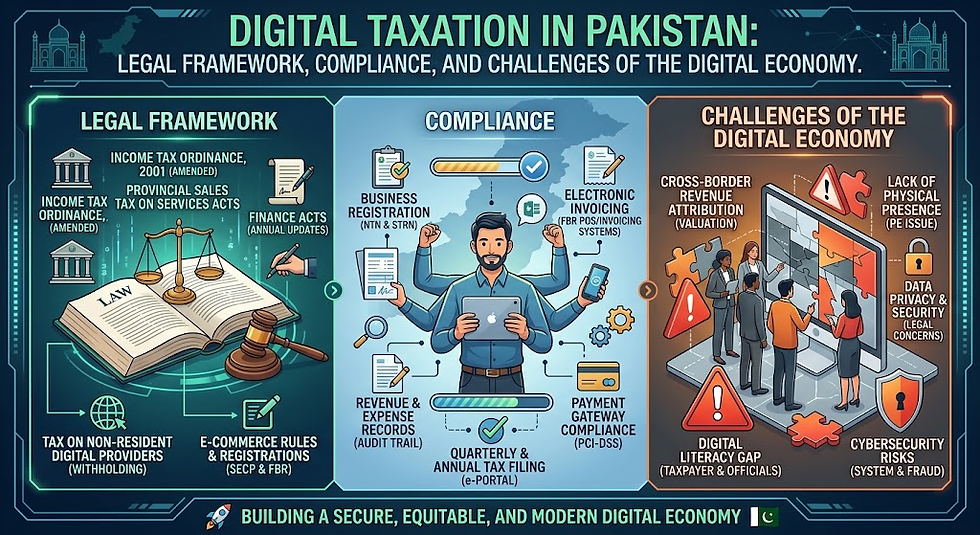
Business tax compliance is an essential part of operating a lawful and sustainable enterprise in Pakistan. Businesses are required to understand their tax obligations, maintain accurate financial records, submit relevant returns, and comply with applicable requirements imposed by tax authorities.
Tax compliance is not limited to paying taxes. It also involves registration, documentation, accurate reporting, withholding obligations, record keeping, responding to notices, and maintaining proper financial systems. Failure to comply can result in additional tax liabilities, penalties, audits, disputes, and other legal consequences.
For businesses of every size, effective tax compliance can reduce legal risks and improve financial management. A well-organized compliance system also helps businesses demonstrate transparency and respond confidently if their tax affairs are reviewed by the authorities.
Understanding Business Tax Compliance
Business tax compliance means fulfilling the legal and administrative obligations that apply to a business under the relevant tax laws.
Depending on the nature and structure of a business, these obligations may include income tax, sales tax, withholding requirements, registration requirements, and other applicable taxes or duties.
The exact obligations can vary according to the type of business, nature of activities, location, turnover, and applicable legislation.
Businesses should therefore assess their tax position carefully rather than relying on general assumptions.
Business Registration and Tax Identification
Proper registration is an important starting point for tax compliance. Businesses may need to obtain the relevant tax registration and identification before carrying out certain taxable activities.
Registration helps tax authorities identify businesses operating within the formal economy.
It also enables businesses to fulfill filing and reporting requirements and maintain an official tax record.
Businesses should ensure that their registration information remains accurate and is updated when legally required.
Income Tax Compliance
Businesses may be subject to income tax on taxable income according to their legal structure and applicable tax rules.
Companies, partnerships, sole proprietorships, and other forms of business may be treated differently for tax purposes.
Businesses should maintain accurate records of income and allowable expenses so that taxable income can be properly determined.
Incorrect reporting may lead to additional tax assessments and potential penalties.
Sales Tax Compliance
Businesses involved in taxable supplies may also have sales tax responsibilities under applicable federal or provincial laws.
Sales tax compliance can involve registration, invoicing, collection, record keeping, and filing of relevant returns.
The applicable rules depend upon the nature of the goods or services and the relevant jurisdiction.
Businesses should properly determine whether their activities fall within the applicable sales tax framework.
Withholding Tax Responsibilities
Businesses may be required to deduct or collect tax when making certain payments.
Withholding obligations can arise in relation to payments such as salaries, services, contracts, supplies, rent, or other transactions depending upon the applicable law.
The business may have to deposit the deducted amount with the relevant authority and maintain appropriate records.
Failure to comply with withholding requirements can create additional liabilities.
Importance of Accurate Tax Returns
Tax returns are formal declarations of a taxpayer's financial and tax position.
Businesses should ensure that returns are prepared using accurate financial information and supporting records.
Before filing, businesses should review income, expenses, deductions, tax credits, withholding amounts, and other relevant information.
An inaccurate return can create problems even where the error was not intentional.
Record Keeping and Documentation
Proper documentation is one of the most important aspects of business tax compliance.
Businesses should maintain records that support their income, expenses, transactions, and tax calculations.
Important records may include:
Sales and purchase invoices.
Bank statements and payment records.
Contracts and agreements.
Payroll and employee records.
Expense documentation.
Tax returns and supporting schedules.
Good records make it easier to prepare accurate returns and respond to tax inquiries.
Digital Tax Compliance
Tax administration is increasingly becoming digital. Businesses may use electronic systems for registration, filing, invoicing, payments, and communication with tax authorities.
Digital systems can make compliance more efficient, but they also require businesses to maintain accurate electronic records.
Businesses should regularly back up important information and protect their accounting systems from unauthorized access.
Tax Invoices and Business Transactions
Invoices provide important evidence of commercial transactions. Businesses should issue invoices containing the information required under applicable tax rules.
Accurate invoices help establish the value and nature of a transaction and can support both the business and its customers during tax verification.
Fake, incomplete, or misleading invoices can create serious legal and financial problems.
Business Expenses and Tax Deductions
Businesses commonly incur expenses in operating their activities. Some expenses may be allowable for tax purposes while others may not qualify.
A business should maintain evidence supporting claimed expenses.
The fact that an expense was actually incurred does not necessarily mean that it is automatically deductible. The applicable tax law determines whether the expense qualifies.
Proper classification is therefore important.
Tax Audits and Investigations
Tax authorities may review the affairs of businesses through audits, inquiries, or other lawful processes.
An audit may examine financial statements, invoices, bank records, tax returns, expense claims, withholding records, and other information.
Businesses should respond to lawful requests and provide relevant documentation within the applicable requirements.
A well-maintained tax record can make the audit process more manageable.
Responding to Tax Notices
Receiving a tax notice does not automatically mean that a business has committed an offence.
A notice may request information, clarification, documents, or explanation regarding a particular tax matter.
Businesses should carefully read the notice and identify what is being requested.
Ignoring a notice can create unnecessary legal problems, while a properly prepared response may resolve the matter at an early stage.
Tax Disputes and Appeals
Businesses may disagree with a tax assessment, penalty, refund decision, or other action taken by a tax authority.
Where the law provides an appeal mechanism, the business may challenge the decision through the appropriate forum.
A tax appeal should be supported by clear legal grounds and relevant evidence.
Businesses should also remain aware of applicable procedural requirements and filing deadlines.
Penalties for Non-Compliance
Failure to comply with tax requirements can result in penalties and other legal consequences.
These may arise from late filing, inaccurate reporting, failure to maintain records, non-payment, incorrect withholding, or other violations.
The exact consequences depend upon the applicable law and the circumstances of the case.
Businesses should therefore address compliance issues promptly instead of allowing them to accumulate.
Tax Evasion and Fraud
Tax evasion involves deliberate unlawful conduct intended to reduce or avoid tax liability.
Examples may include concealing income, creating false records, claiming fabricated expenses, or deliberately providing misleading information.
Such conduct can result in significantly more serious consequences than an ordinary administrative mistake.
Businesses should maintain strong internal controls to prevent fraudulent tax practices.
Corporate Responsibility for Tax Compliance
Tax compliance should form part of a company's overall governance system.
Directors and senior management should ensure that appropriate procedures exist for accounting, reporting, tax payments, and record keeping.
Responsibility should not be left entirely to one employee or department without proper oversight.
Strong governance reduces the risk of errors and intentional misconduct.
Employee and Payroll Tax Compliance
Businesses with employees may have tax-related responsibilities concerning salaries and other employment payments.
Payroll systems should accurately calculate relevant deductions and maintain appropriate employee records.
Businesses should also ensure that employment-related tax information is properly reported where required.
Errors in payroll tax compliance can affect both the employer and employees.
International and Cross-Border Business
Businesses dealing with foreign customers, suppliers, contractors, or investors may face additional tax considerations.
Cross-border transactions can involve questions concerning source of income, withholding, tax treaties, documentation, and foreign payments.
Businesses engaged in international transactions should examine the applicable rules before entering into significant arrangements.
Proper planning can reduce the risk of unexpected tax liabilities.
Tax Compliance and Business Contracts
Contracts can also have tax implications. Agreements should clearly identify payment terms, applicable taxes, responsibilities for withholding, and other relevant financial obligations.
Ambiguous tax clauses can create disputes between contracting parties.
Businesses should therefore consider tax implications when drafting major commercial agreements.
Internal Tax Compliance Policies
Larger businesses can benefit from formal tax compliance policies.
Such policies may establish procedures for:
Preparing and reviewing tax returns.
Maintaining financial records.
Approving expenses.
Managing withholding obligations.
Responding to tax notices.
Conducting internal compliance reviews.
Clear internal procedures help employees understand their responsibilities.
Benefits of Strong Tax Compliance
Good tax compliance provides more than protection against penalties.
It can improve financial management, strengthen business credibility, support access to financing, reduce disputes, and improve relationships with customers and regulators.
Businesses with organized financial records are also better prepared for audits and legal proceedings.
Compliance should therefore be viewed as part of responsible business management.
Challenges in Business Tax Compliance
Businesses may face several challenges when complying with tax laws. Complex legislation, changing regulatory requirements, digital systems, record-keeping burdens, and uncertainty concerning tax treatment can create difficulties.
Small businesses may face additional challenges because they often have limited financial and legal resources.
Professional advice, accounting systems, employee training, and regular compliance reviews can help address these challenges.
Role of Professional Tax Advice
Tax laws can be technical and may apply differently depending on the nature of a business transaction.
Businesses involved in complex transactions, tax audits, international dealings, or significant disputes may benefit from professional legal and tax advice.
A qualified professional can help identify potential risks, review documentation, explain applicable requirements, and assist with disputes where necessary.
Creating a Tax Compliance Culture
Tax compliance should be part of a business's organizational culture.
Employees involved in finance, sales, procurement, payroll, and management should understand that their decisions can have tax consequences.
Regular training and internal review can help identify mistakes before they become serious.
A strong compliance culture can protect both the business and its management from unnecessary legal risks.

Conclusion
Business tax compliance in Pakistan is an essential legal responsibility for enterprises operating in the formal economy. Compliance involves much more than paying tax. It includes registration, accurate reporting, withholding, record keeping, invoicing, digital compliance, responding to notices, and maintaining appropriate internal controls.
Businesses that fail to comply may face additional tax liabilities, penalties, audits, disputes, and in serious cases, legal proceedings. Deliberate tax evasion can carry even more serious consequences.
The best approach is to establish a structured compliance system from the beginning. Businesses should maintain accurate financial records, review tax obligations regularly, train responsible employees, and seek professional advice when complex issues arise.
Strong tax compliance ultimately benefits both businesses and the wider economy. It promotes transparency, reduces legal risks, supports responsible financial management, and helps create a more reliable and accountable business environment in Pakistan.