Commercial and Mercantile Law in Pakistan: Its Role in Shaping the Business Environment

Updated: Oct 1

Understanding Mercantile Law in Pakistan
Mercantile law, also known as commercial law, forms the legal backbone of business activities in Pakistan. It governs trade, commerce, contracts, partnerships, banking, corporate operations, and the overall regulatory framework that businesses must follow. In a rapidly growing economy like Pakistan, mercantile law ensures that commercial activities are conducted in a fair, transparent, and legally secure environment.
Without strong mercantile laws, businesses would face uncertainty, fraud risks, and contractual disputes that could destabilize the economy. In Pakistan, this legal framework plays a critical role in promoting investor confidence, regulating business conduct, and supporting economic development.
Importance of Mercantile Law in Pakistan’s Business Environment
Mercantile law is essential for maintaining order and discipline in commercial transactions. It provides clear rules for businesses and protects the rights of all parties involved.
Ensures legal structure for business operations
Protects businesses from fraud and unfair trade practices
Strengthens investor confidence in the market
Provides mechanisms for dispute resolution
Supports economic stability and growth
Regulates corporate governance and accountability
In Pakistan’s emerging market economy, these functions are crucial for attracting both local and foreign investment.
Legal Framework of Mercantile Law in Pakistan
Pakistan’s mercantile legal system is based on a combination of statutory laws, judicial precedents, and regulatory frameworks.
Major laws include:
Contract Act, 1872 (governs agreements and obligations)
Companies Act, 2017 (regulates corporate entities)
Partnership Act, 1932 (regulates partnerships)
Negotiable Instruments Act, 1881 (deals with cheques, promissory notes, bills of exchange)
Sales of Goods Act, 1930 (governs sale and purchase of goods)
Arbitration Act, 1940 (dispute resolution framework)
These laws collectively regulate commercial relationships and ensure smooth business operations in Pakistan.
Role of Mercantile Law in Business Formation and Structure
Mercantile law provides the legal foundation for forming different types of business entities in Pakistan.
Defining legal status of sole proprietorships, partnerships, and companies
Establishing procedures for company registration and incorporation
Outlining rights and duties of shareholders and directors
Ensuring compliance with corporate governance standards
Regulating mergers, acquisitions, and corporate restructuring
This legal structure ensures that businesses operate within defined boundaries and maintain transparency in their operations.
Protection of Contracts and Commercial Agreements
Contracts are the backbone of all commercial transactions. Mercantile law ensures that agreements are legally enforceable and binding.
Validity of contracts under legal conditions (offer, acceptance, consideration)
Enforcement of written and oral agreements
Remedies for breach of contract such as damages or specific performance
Protection against fraudulent or coerced agreements
Legal certainty in business dealings
In Pakistan, the Contract Act, 1872 plays a central role in ensuring that business agreements are honored and disputes are resolved fairly.
Regulation of Banking and Financial Transactions
Mercantile law also governs banking operations and financial instruments, ensuring smooth financial transactions in the economy.
Regulation of cheques, drafts, and promissory notes
Banking obligations and customer rights
Prevention of financial fraud and dishonored transactions
Framework for credit and lending systems
Legal remedies for financial disputes
This regulatory structure is essential for maintaining trust in Pakistan’s banking and financial systems.
Dispute Resolution and Commercial Litigation
Business disputes are inevitable in any economy. Mercantile law provides structured mechanisms to resolve conflicts efficiently.
Civil litigation in commercial courts
Arbitration and mediation for faster resolution
Settlement through negotiation between parties
Enforcement of court judgments
Protection of intellectual and contractual rights
Pakistan has increasingly encouraged alternative dispute resolution (ADR) to reduce the burden on courts and speed up commercial justice.
Role in Foreign Investment and Trade
A strong mercantile legal system is essential for attracting foreign investment and promoting international trade.
Providing legal certainty for foreign investors
Protecting international trade agreements
Ensuring compliance with global trade standards
Supporting export-import regulations
Reducing investment risks through legal protection
Foreign investors are more likely to invest in Pakistan when they are confident that their rights will be protected under a stable legal system.
Corporate Governance and Accountability
Mercantile law plays a significant role in ensuring ethical and transparent corporate governance in Pakistan.
Accountability of company directors and executives
Protection of shareholder rights
Disclosure of financial information
Prevention of corporate fraud and mismanagement
Compliance with regulatory authorities like SECP
Strong corporate governance improves business credibility and long-term sustainability.
Challenges in Mercantile Law Implementation in Pakistan
Despite having a structured legal system, Pakistan faces several challenges in the implementation of mercantile law.
Delayed judicial processes and case backlogs
Lack of awareness among small businesses
Weak enforcement of contracts and judgments
Corruption and bureaucratic inefficiencies
Outdated legal procedures in some areas
These issues reduce the effectiveness of mercantile law and hinder business growth.
Recent Reforms and Improvements
Pakistan has introduced several reforms to strengthen mercantile law and improve business conditions.
Establishment of special commercial courts
Digitalization of company registration processes
Strengthening of SECP regulations
Promotion of arbitration and mediation systems
Updates in corporate governance standards
These reforms aim to create a more efficient and business-friendly legal environment.
Impact of Mercantile Law on Economic Development
Mercantile law directly contributes to Pakistan’s economic growth by creating a stable business environment.
Encouraging entrepreneurship and startups
Increasing foreign direct investment (FDI)
Enhancing trade efficiency
Reducing financial and legal risks
Strengthening institutional trust in markets
A strong legal framework ensures that economic activities are predictable and secure.
Future of Mercantile Law in Pakistan
The future of mercantile law in Pakistan is moving toward modernization, digitalization, and international alignment.
Greater use of online dispute resolution systems
Stronger enforcement of corporate compliance
Integration with global trade laws
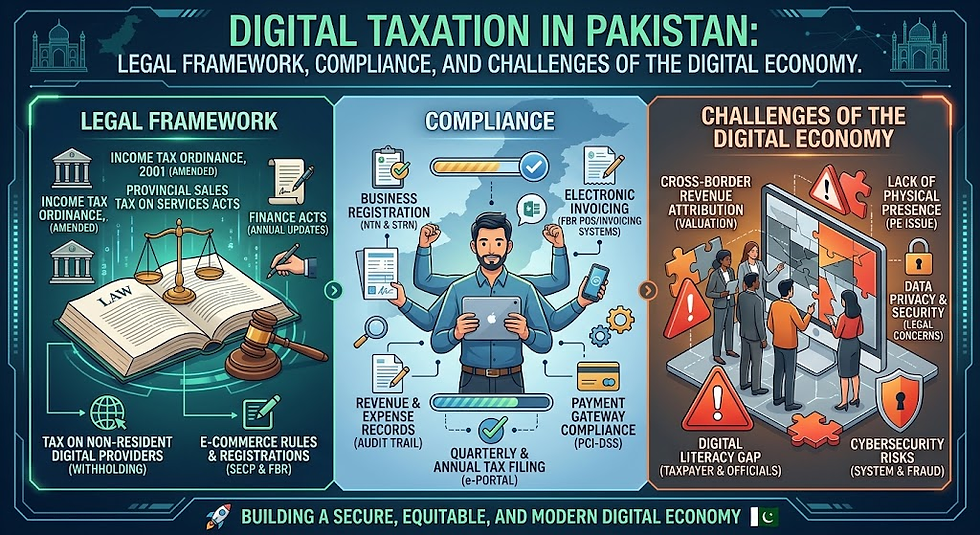
Expansion of e-commerce regulations
Faster judicial processes through legal reforms
These advancements will make Pakistan’s business environment more competitive globally.
Conclusion
Mercantile law is a fundamental pillar of Pakistan’s business environment. It regulates commercial activities, protects business interests, ensures contract enforcement, and promotes economic stability. Although challenges such as judicial delays and enforcement issues still exist, ongoing reforms are improving the legal landscape. A strong mercantile law system not only supports domestic businesses but also attracts foreign investment, strengthens corporate governance, and drives long-term economic growth. In essence, the development and enforcement of mercantile law are vital for building a transparent, efficient, and globally competitive business ecosystem in Pakistan.