Employment Contracts and Employee Rights

Updated: Oct 1
Understanding Workplace Legal Protection in Pakistan
Employment is not only an economic relationship between an employer and an employee; it is also a legal relationship governed by contractual obligations, labour laws, workplace policies, and fundamental principles of fairness. A clear employment contract helps define the responsibilities of both parties, while employee rights provide protection against unlawful treatment, unfair dismissal, non-payment of wages, discrimination, and other workplace concerns.
In Pakistan, employment relationships may be influenced by the nature of the workplace, applicable provincial or federal labour legislation, the employee’s position, and the terms of the employment agreement. Understanding these legal requirements is important for both employers and employees because unclear contractual arrangements can lead to misunderstandings and disputes.
An employment contract provides a foundation for the working relationship. It may establish the employee's position, salary, working responsibilities, benefits, leave arrangements, confidentiality obligations, termination provisions, and other important conditions of employment. At the same time, labour laws may provide minimum protections that cannot simply be removed through a private agreement.
For employees, knowledge of workplace rights promotes confidence and helps them identify unlawful practices. For employers, compliance with employment laws reduces legal risks and supports a professional and productive workplace.
Understanding Employment Contracts
An employment contract is an agreement between an employer and an employee that establishes the terms and conditions under which the employee will provide services in return for compensation.
The agreement may be written or, depending on the circumstances and applicable law, arise from conduct and other evidence. However, a written contract is strongly preferable because it provides clear evidence of the parties' intentions.
A well-drafted employment contract reduces uncertainty by explaining what each party is expected to do. It also provides an important reference if a disagreement arises during or after employment.
Why Employment Contracts Matter
A properly prepared employment contract protects both parties. Employees gain clarity regarding their salary, responsibilities, benefits, and workplace conditions, while employers can clearly communicate performance expectations and organizational requirements.
A contract also reduces the possibility of disputes caused by informal promises or misunderstandings.
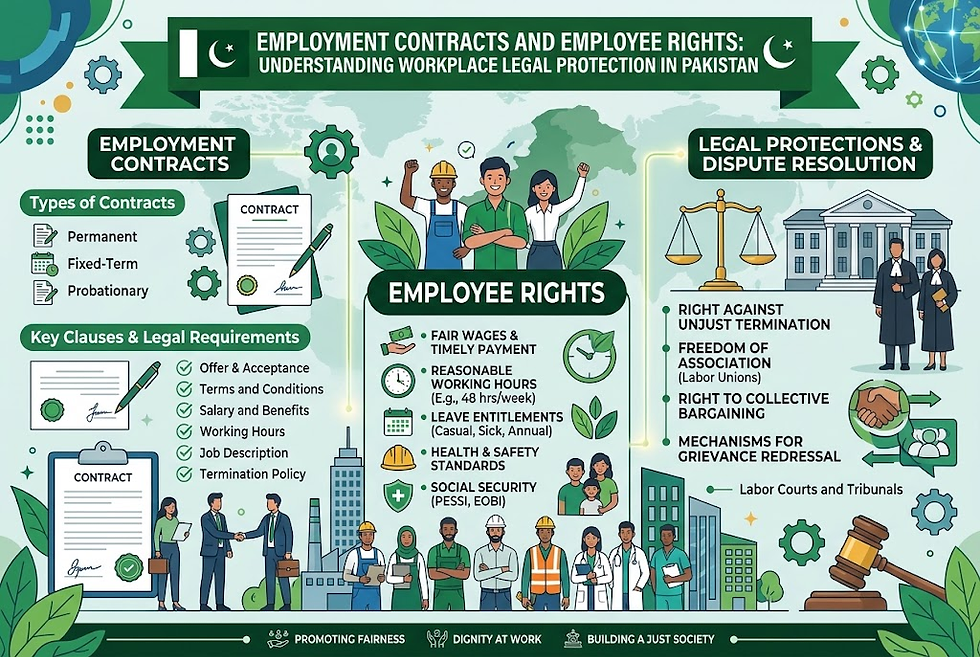
Important terms may include:
Job title and responsibilities.
Salary and payment arrangements.
Working hours and workplace location.
Leave and benefits.
Probationary arrangements.
Confidentiality obligations.
Notice and termination provisions.
Disciplinary procedures.
Applicable workplace policies.
Clear contractual terms contribute to a more stable employment relationship.
Essential Elements of an Employment Contract
Although employment agreements vary according to the nature of the work, certain elements are particularly important.
The identity of the employer and employee should be clearly stated. The position, duties, compensation, working arrangements, and relevant policies should also be identified.
The contract should use clear language and avoid terms that are ambiguous or inconsistent with applicable labour legislation.
Where statutory protections apply, a contractual clause cannot generally be used as a lawful means of avoiding mandatory legal obligations.
Employee Rights Under Pakistani Law
Employees may enjoy a range of legal protections depending upon their employment status, workplace, and applicable legislation. These protections may relate to wages, working conditions, leave, termination, workplace safety, social security, and other employment matters.
The exact rights available to an employee depend on the relevant legal framework and circumstances of the employment.
Understanding the distinction between contractual rights and statutory rights is therefore important. A contract may provide additional benefits, but it should not be assumed that every contractual term can override mandatory labour protections.
Right to Receive Wages and Salary
One of the most fundamental employee rights is the right to receive agreed compensation for work performed.
Employers are expected to comply with applicable laws concerning payment of wages and deductions. Unlawful withholding or unauthorized deductions may create legal liability.
Employees should retain salary records, employment contracts, pay slips, and other evidence relating to compensation. Such documents can become important if a wage dispute arises.
Working Hours and Leave
Employment laws may regulate working hours, rest periods, weekly holidays, and different categories of leave depending upon the applicable legislation and nature of employment.
Employment contracts may provide additional leave benefits, but workplace policies should remain consistent with mandatory legal requirements.
Clear leave procedures help prevent disagreements between employees and management.
Workplace Health and Safety
A safe working environment is an important aspect of employee protection. Employers may have legal responsibilities to take reasonable measures to protect workers from workplace hazards.
Health and safety requirements can differ according to the industry and workplace. Industrial establishments, offices, construction sites, and other environments may present different risks and therefore require different protective measures.
Employers should take workplace safety seriously because negligence can expose both workers and organizations to significant consequences.
Protection Against Unfair Treatment
Employees should be treated fairly and in accordance with applicable workplace rules and legal protections. Unfair treatment may arise through unlawful discrimination, harassment, retaliation, or arbitrary workplace practices.
Organizations should maintain clear policies for addressing complaints and workplace misconduct.
A professional workplace depends upon respect, accountability, and equal treatment.
Workplace Harassment and Employee Protection
Workplace harassment can seriously affect an employee's dignity, mental well-being, professional development, and ability to work safely.
Pakistan has a legal framework addressing workplace harassment and providing mechanisms for complaints and institutional accountability. Employers should establish appropriate procedures for dealing with complaints and ensure that employees know how to access those mechanisms.
A workplace free from harassment promotes both employee welfare and organizational productivity.
Termination of Employment
Termination is one of the most sensitive aspects of an employment relationship. An employer may have the right to terminate employment in accordance with the contract and applicable law, but the process must comply with relevant legal requirements.
Similarly, employees may have obligations concerning notice when they voluntarily leave employment.
Termination provisions should clearly identify applicable notice requirements, grounds for termination, and any relevant procedures.
Unfair or Unlawful Dismissal
An employee may challenge termination where it violates applicable labour law, contractual obligations, or recognized legal protections.
The legality of dismissal depends upon factors such as the employee's status, the applicable legislation, the terms of the contract, the reason for termination, and whether the employer followed the required procedure.
Employees facing dismissal should preserve relevant employment records and obtain appropriate legal advice where necessary.
Probation and Permanent Employment
Many employment contracts contain probationary provisions allowing employers to evaluate an employee's suitability for a position.
The rights of an employee during probation may differ from those of a permanent employee depending upon the applicable law and contractual terms.
Employers should clearly communicate probationary conditions rather than relying upon informal arrangements.
Employees should also understand how confirmation, extension, or termination during probation is addressed in their contract.
Employee Benefits and Entitlements
Depending upon the employment relationship and applicable laws, employees may receive various benefits in addition to basic salary.
These may include:
Paid leave.
Social security benefits.
Pension or provident fund arrangements.
Bonuses or allowances.
Medical benefits.
Retirement-related benefits.
Other contractual benefits.
Employees should carefully review their contracts and workplace policies to understand which benefits are contractual and which arise from statutory requirements.
Confidentiality and Employee Obligations
Employment contracts do not only protect employees; they also establish obligations that employees must fulfil.
Employees may be required to protect confidential business information, follow workplace policies, use company property responsibly, and perform their assigned duties professionally.
Confidentiality clauses should be drafted carefully and should distinguish legitimate protection of business information from unreasonable restrictions on an employee's lawful activities.
Non-Compete and Restrictive Clauses
Some employment contracts contain provisions restricting employees from engaging in competing activities after leaving employment. The enforceability of such clauses depends upon applicable Pakistani contract law and the circumstances of the particular agreement.
Employers should ensure that restrictive clauses are legally appropriate, while employees should understand the consequences before agreeing to them.
Legal review can be particularly useful where a contract contains extensive post-employment restrictions.
Employee Records and Documentation
Maintaining proper employment records is essential for both employers and employees.
Employees should keep copies of:
Employment contracts.
Appointment letters.
Salary records.
Leave records.
Workplace correspondence.
Performance documents.
Termination or resignation records.
Proper documentation can provide valuable evidence when employment disputes arise.
Common Employment Disputes
Workplace disputes may arise for many reasons, including disagreements about salary, termination, leave, workplace conduct, benefits, working conditions, or contractual obligations.
Common disputes include:
Non-payment or delayed payment of wages.
Unlawful deductions.
Disputes concerning termination.
Denial of contractual benefits.
Workplace harassment.
Breach of confidentiality obligations.
Disagreements over notice periods.
Disciplinary disputes.
Early communication and proper documentation can often prevent minor disagreements from developing into formal disputes.
Role of Labour Authorities and Courts
Where employment disputes cannot be resolved internally, employees may have access to relevant labour authorities, tribunals, courts, or other legal forums depending upon the nature of the claim.
The appropriate forum depends on the employee's status, the applicable legislation, and the subject of the dispute.
Employers should also maintain proper records and follow lawful procedures to protect both organizational interests and employee rights.
Alternative Dispute Resolution in Employment Matters
Negotiation, mediation, and internal grievance procedures can provide efficient ways of resolving workplace disputes.
Alternative dispute resolution allows employers and employees to communicate directly and seek practical solutions without immediately resorting to lengthy litigation.
Effective internal complaint mechanisms can be particularly valuable for maintaining professional relationships and reducing unnecessary legal costs.
Importance of Legal Awareness
Both employers and employees benefit from understanding employment law. Employees who know their rights are better positioned to identify unlawful practices, while employers who understand their obligations can create compliant workplace policies.
Legal awareness also encourages better employment contracts. Clear agreements reduce uncertainty and establish realistic expectations from the beginning of the employment relationship.
Professional legal advice can be valuable when drafting complex contracts or dealing with serious workplace disputes.
Strengthening Employment Practices in Pakistan
A strong employment environment requires more than written contracts. Employers should develop transparent workplace policies, maintain accurate records, provide safe working conditions, and establish effective grievance mechanisms.
Employees should also fulfil their contractual responsibilities, respect workplace policies, protect confidential information, and communicate concerns through appropriate channels.
A balanced approach creates trust between management and workers.
The Future of Employment Law
Employment relationships are evolving as technology, remote work, digital platforms, flexible working arrangements, and new forms of employment become increasingly important. Legal frameworks must continue adapting to these developments while protecting fundamental employee rights.
Employment contracts will increasingly need to address issues such as remote working, digital monitoring, data protection, intellectual property, flexible schedules, and cybersecurity.
The future workplace will require both contractual clarity and effective legal safeguards.
Conclusion
Employment contracts and employee rights form the foundation of a fair and professional workplace. A clear employment agreement establishes the responsibilities of employers and employees, while labour laws provide important protections relating to wages, working conditions, leave, workplace safety, harassment, termination, and other employment matters.
For employees, understanding these rights provides greater confidence and helps protect against unlawful treatment. For employers, compliance with employment laws promotes stability, reduces disputes, and supports a responsible organizational culture.
As employment practices continue to evolve, particularly through technology and flexible working arrangements, clear contracts and strong legal protections will remain essential. A workplace based on fairness, transparency, accountability, and respect benefits employees, employers, and the wider economy alike.