
Professional Bachelor of Law LLB Course at Pasban Law College

Every significant legal career begins with a single foundational decision where to study law. This decision shapes not only the quality of education a student receives but also the professional networks they build, the practical skills they develop, the values they internalize, and ultimately the kind of lawyer they become. For students in Pakistan who are serious about building a legal career of genuine distinction, Pasban Law College represents the answer to that foundational question. The Professional Bachelor of Laws program at Pasban Law College is not simply a degree course, it is a comprehensive, rigorous, and transformative educational experience designed to produce lawyers who are fully equipped to meet the demands of modern legal practice. It is a program built on decades of experience, driven by an unwavering commitment to excellence, and constantly evolving to reflect the changing realities of the legal profession. If you are ready to take the most important step toward a successful legal career, the Professional LLB program at Pasban Law College is where that step begins.
Understanding the Professional LLB Degree
The Bachelor of Laws, known universally as the LLB, is the primary academic qualification in law and the essential foundation of any legal career. It is the degree that transforms an interested student into a qualified legal professional, the qualification that opens the door to practice as an advocate, a corporate counsel, a government lawyer, a judge, or any of the many other roles that the legal profession encompasses. Understanding what the LLB represents and what it demands is the starting point for any prospective law student making decisions about their educational future.
The LLB is simultaneously a rigorous academic degree and a professional qualification. As an academic degree, it requires students to engage seriously with complex bodies of legal doctrine, to develop the analytical and critical thinking skills that sophisticated legal reasoning demands, and to produce written work of professional quality that demonstrates both depth of knowledge and clarity of expression. As a professional qualification, it prepares students for the actual work of legal practice for advising clients, drafting documents, arguing cases, and navigating the procedural and institutional dimensions of legal work.
This dual character sets the LLB apart from most other undergraduate degrees. A student of history or literature is primarily developing academic skills and knowledge. A student of law is developing those qualities and simultaneously training for a specific profession with specific technical requirements, ethical obligations, and practical demands. The best LLB programs honor both dimensions fully, and the Professional LLB program at Pasban Law College is designed precisely to do this to produce graduates who are intellectually accomplished and professionally competent in equal measure.
The Professional LLB at Pasban Law College is structured to meet the requirements of the Pakistan Bar Council and the relevant provincial bar councils, ensuring that graduates are qualified to sit for bar examinations and to pursue admission to practice as advocates. It is a program that has been designed in close consultation with the legal profession and is continuously reviewed to ensure that it reflects both regulatory requirements and the practical needs of legal employers across all sectors of the profession.
The Pasban Law College Difference
Among the many institutions offering legal education in Pakistan, Pasban Law College occupies a position of particular distinction. This distinction is not self-proclaimed; it is reflected in the careers of the college's graduates, the quality of the institutions that seek to recruit those graduates, and the reputation the college has built over years of consistent commitment to the highest standards of legal education. Understanding what makes Pasban Law College different from other institutions is essential for any prospective student making an informed choice about where to study law.
The most fundamental difference lies in the college's philosophy of legal education. Pasban Law College does not view legal education as the transmission of information from teacher to student. It views legal education as a transformative process, one that develops not just legal knowledge but legal thinking, not just technical skills but professional judgment, not just academic credentials but genuine professional readiness. Every aspect of the Professional LLB program reflects this philosophy, from the way courses are designed and delivered to the way students are assessed and supported.
Faculty quality is another critical differentiator. Pasban Law College has assembled a faculty that is exceptional by any standard: a combination of distinguished academic scholars, experienced practitioners with substantial professional records, and educators who have dedicated their careers to the craft of teaching law effectively. Students at Pasban are taught by people who know their subjects deeply, care about their students genuinely, and bring to their teaching the kind of expertise and commitment that produces real educational outcomes rather than mere credential delivery.
The college's culture of personal attention and mentorship is something that students consistently identify as one of the most valuable aspects of their Pasban experience. In an era when many educational institutions process students in large anonymous cohorts, Pasban maintains a culture in which individual students are known, valued, and actively supported in their development. This culture of personal investment in student success makes a measurable difference in educational outcomes and in the confidence and readiness with which graduates enter professional life.
Program Structure and Academic Framework
The Professional Bachelor of Laws program at Pasban Law College is structured across multiple years of full-time study, with each year building systematically on the foundations laid in previous years to create a progressive and coherent educational experience. The structure reflects careful thinking about how legal knowledge is most effectively acquired and how the various dimensions of professional competence are best developed across the span of a multi-year degree program.
The first year of the program establishes the foundational knowledge and skills upon which all subsequent learning rests. Students are introduced to the major areas of substantive law through core subjects that provide essential conceptual frameworks. They are also introduced to the methods of legal study: how to read cases, how to identify legal principles, how to construct legal arguments, and how to conduct basic legal research and write legal analysis. The first year is deliberately challenging, designed to ensure that students develop the intellectual habits and academic skills that will be essential throughout their legal education and throughout their careers.
The intermediate years of the program deepen and extend the foundational knowledge of the first year while introducing students to a wider range of legal subjects and beginning the process of specialization. Students engage with more complex and nuanced areas of law, develop more sophisticated research and writing skills, and begin to develop practical legal skills through clinical and advocacy training components. Assessment in these years becomes progressively more demanding, reflecting the growing sophistication of what students are expected to know and be able to do.
The final year of the program is characterized by advanced study, substantial specialization, and intensive practical preparation for professional life. Students complete advanced elective subjects in their chosen areas of specialization, produce substantial research work, engage fully with the practical training components of the program, and receive comprehensive career preparation support. By the time they complete the final year, students are ready academically, practically, and professionally to begin their legal careers with genuine confidence and competence.
Core Legal Subjects in the Curriculum
The core curriculum of the Professional LLB program at Pasban Law College encompasses the foundational legal subjects that every qualified lawyer must master, regardless of the specific field of practice they ultimately pursue. These subjects are required of all students because competence in each of them is essential for professional qualification and because the legal knowledge and analytical skills they develop underpin effective legal work in every area of practice.
Constitutional law occupies a position of fundamental importance in the curriculum, providing students with a thorough understanding of the constitutional framework of Pakistan, the distribution of governmental power, the protection of fundamental rights, and the relationship between the state and the individual. Pakistan's constitutional history is rich and complex, and a deep understanding of it is essential for any lawyer who wishes to practice at the intersection of law and public life. Constitutional law also raises the most profound questions about the nature and purpose of law itself, making it one of the most intellectually stimulating subjects in the entire curriculum.
Contract law provides the legal framework that governs the agreements upon which commercial and much of personal life depends. Students develop a thorough understanding of how contracts are formed, what terms they contain, when performance is excused, and what remedies are available when contracts are breached. Contract law is relevant to legal practice in virtually every field, making it one of the most practically important subjects in the program.
Criminal law and procedure address the definition and classification of criminal offenses, the mental elements required for criminal liability, the defenses available to accused persons, and the procedural framework through which criminal justice is administered in Pakistan. Understanding criminal law is essential not just for those who intend to practice as criminal lawyers but for any lawyer who may encounter issues of criminal liability in their practice, and the subject raises fundamental questions about justice, punishment, and the proper role of the state in regulating human conduct.
Tort law, property law, family law, Muslim personal law, civil procedure, evidence, and company law complete the core curriculum, each providing essential knowledge and developing important analytical skills. Together these core subjects give graduates the comprehensive legal foundation needed for qualification and effective practice across the full range of legal work.
Specialized Elective Courses Available
Beyond the core curriculum, the Professional LLB program at Pasban Law College offers a rich array of specialized elective courses that allow students to develop particular expertise in areas aligned with their professional interests and career goals. The range of elective options reflects the college's understanding that the legal profession is diverse and that different students have different callings within it different areas of law that excite their intellectual interest and align with their vision of the professional they want to become.
Corporate and commercial law electives attract students drawn to the legal dimensions of business activity. Courses in company law, banking and finance, securities regulation, mergers and acquisitions, competition law, and commercial arbitration develop the specialized knowledge that corporate practice demands. Students who complete a substantial selection of these electives emerge with a level of commercial legal knowledge that makes them highly competitive candidates for positions with leading commercial law firms and corporate legal departments.
Criminal litigation electives deepen the knowledge and develop the specialized skills needed for effective criminal practice. Advanced criminal law, criminal evidence, sentencing and penology, white collar crime, and advanced advocacy training provide the specialized preparation that aspiring criminal lawyers need. Combined with the practical training components of the program, these electives produce graduates who are genuinely ready to practice as criminal lawyers from the beginning of their professional careers.
Human rights and constitutional litigation electives serve students whose professional aspirations lie in public interest law and constitutional advocacy. Advanced constitutional law, international human rights law, refugee and migration law, gender and the law, and public interest litigation strategy are among the courses available in this pathway, preparing students for careers in advocacy, government, international organizations, and civil society.
Intellectual property law, environmental law, labor and employment law, international trade law, tax law, and cyber law represent additional elective areas, ensuring that students can find a pathway that aligns with virtually any professional direction the contemporary legal landscape offers.
Quality of Teaching Staff and Academic Faculty
The quality of education that students receive at any institution is fundamentally determined by the quality of the people who teach them, and Pasban Law College has made faculty excellence a consistent priority throughout its history. The college's faculty represents a remarkable concentration of legal knowledge, professional experience, and teaching skill of a team whose collective capabilities create a learning environment of genuinely exceptional quality.
Senior academics on the faculty are scholars of distinction whose work has contributed to the development of legal knowledge in Pakistan and beyond. They bring to their teaching a depth of understanding that extends far beyond the surface of their subjects an understanding of why the law is the way it is, how it has developed over time, where its tensions and uncertainties lie, and how it might evolve in response to changing social and economic conditions. This depth of perspective enriches every lecture and seminar they deliver and challenges students to think about law with a sophistication that fundamentally develops their analytical capabilities.
Practitioner faculty members bring the daily realities of legal practice into the classroom with an authenticity that no amount of academic learning can replicate. Senior advocates who have appeared in the Supreme Court and High Courts, corporate lawyers who have structured complex transactions, government lawyers who have advised on significant policy matters, and retired judges who have made decisions that shaped legal doctrine all contribute to the faculty. Their teaching is grounded in real experience and illuminated by real examples, giving students insight into what legal practice actually involves and what it actually demands.
The teaching culture at Pasban Law College is one in which excellence is expected and supported. Faculty members are provided with the resources and institutional backing they need to teach effectively, and they are held to standards of teaching quality that ensure students receive consistently high-quality educational experiences. The college invests in faculty development, supporting teachers in keeping their knowledge current, developing their pedagogical skills, and engaging with the broader legal educational community.
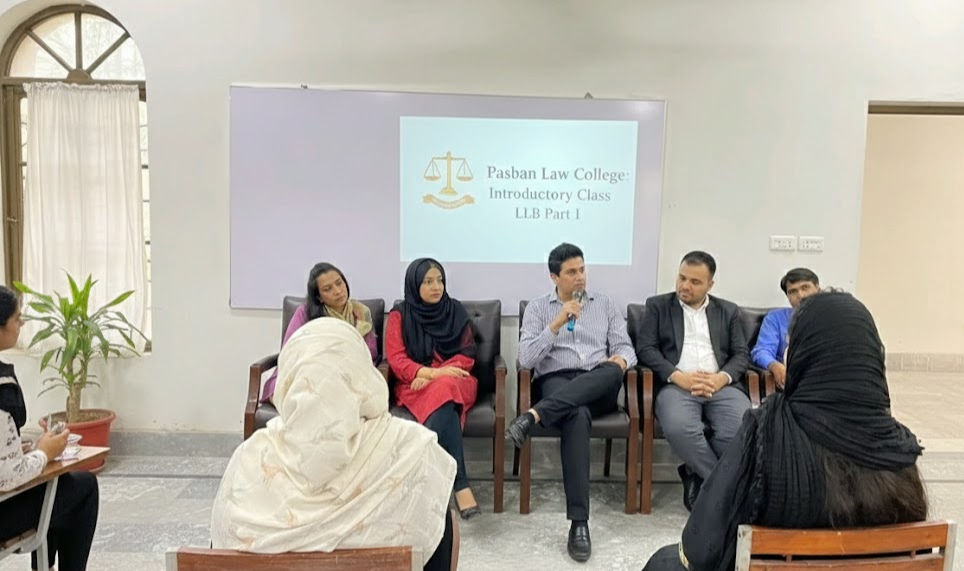
Practical Legal Training and Clinical Experience
The Professional LLB program at Pasban Law College is built on the conviction that legal education must produce lawyers who can practice, not just lawyers who can think and that producing practice-ready graduates requires a sustained, serious, and well-resourced commitment to practical legal training throughout the degree program. This conviction is reflected in the substantial practical training components that are integrated into every year of the program and that collectively ensure that graduates are genuinely ready for professional legal work.
The college's legal aid clinic is the cornerstone of practical training at Pasban. Operating as a genuine legal service provider to individuals and communities who lack access to private legal representation, the clinic gives students the opportunity to do real legal work for real clients under the supervision of qualified and experienced lawyers. Students in the clinic conduct client interviews, analyze legal problems, research applicable law, draft documents, and in appropriate cases represent clients in legal proceedings. This is not simulation, it is the actual work of legal practice, and the learning that results from doing it under careful supervision is qualitatively different from anything that classroom instruction can provide.
The clinic exposes students to the full human dimension of legal practice, the reality that legal problems are not abstract intellectual puzzles but real challenges faced by real people whose lives and welfare are affected by the legal outcomes. This exposure develops not just legal skills but professional empathy, the ability to understand and respond appropriately to the human context of legal work that distinguishes truly excellent lawyers from merely technically competent ones.
Moot court training provides intensive development of oral advocacy skills through regular participation in simulated court proceedings. Students argue complex legal problems before panels of experienced judges who challenge their reasoning, test their knowledge, and assess their advocacy with the same rigor they would bring to evaluating a junior advocate appearing before them in a real case. The experience develops confidence, sharpens thinking, and builds the composure under pressure that courtroom advocacy demands.
Internship Programs and Industry Partnerships
Pasban Law College has developed an extensive network of partnerships with legal employers across all sectors of the profession, and these partnerships translate into internship opportunities of genuine quality and professional significance for LLB students. The college's approach to internship programs is strategic; it is designed not just to expose students to legal environments but to ensure that they gain substantive experience, make meaningful professional connections, and develop the professional profile that makes them competitive candidates for employment upon graduation.
Law firm internships place students in environments where they work alongside experienced lawyers on real matters. Depending on the nature of the firm and the student's year of study, internship work might include legal research, document review, assistance with case preparation, attendance at client meetings, and observation of court proceedings. The quality of internship experience at leading firms is consistently high, reflecting the college's careful cultivation of these relationships and the reputation of Pasban students for academic capability and professional seriousness.
Corporate legal department placements give students exposure to in-house legal practice, a growing sector of the legal market that offers distinctive career opportunities. Students in these placements learn how legal considerations are integrated into business decision-making, how legal risk is identified and managed at an organizational level, and how corporate lawyers function as strategic advisors to the businesses they serve. This exposure is invaluable both for students who aspire to in-house careers and for those who will practice in private firms serving corporate clients.
Government placement opportunities with prosecution services, regulatory agencies, ministry legal departments, and other government bodies give students insight into public law practice and public service legal work. These placements are particularly valuable for students interested in constitutional and administrative law, regulatory practice, or careers in public service. Judicial attachment programs, where students spend time in judges' chambers observing and assisting with judicial work, provide a unique perspective on the administration of justice that profoundly enriches legal education.
Student Support Services and Academic Assistance
Pasban Law College understands that the success of its students depends not just on the quality of the education it provides but on the quality of the support it offers to students as they navigate the significant academic and personal challenges that legal education presents. The college has invested in a comprehensive range of student support services designed to ensure that every student has access to the assistance they need to succeed academically and to thrive personally throughout their time at the college.
Academic support services include tutoring programs, study skills workshops, and structured peer learning groups that help students develop the academic capabilities needed for success in legal study. Students who are struggling with particular subjects or with the transition to legal study more generally can access personalized assistance from academic support staff who are trained to identify and address specific learning challenges. The college's approach to academic support is proactive rather than reactive; it does not wait for students to fail before offering help but actively identifies students who may be at risk and reaches out with support before problems become serious.
Personal counseling and wellbeing services recognize that the demands of legal study can be significant sources of stress, and that students' mental and emotional wellbeing is as important to their success and their future professional effectiveness as their academic performance. Professional counselors are available to students who need support with stress, anxiety, personal challenges, or any of the other difficulties that can arise during years of intensive study. The college maintains a culture in which seeking support is encouraged rather than stigmatized, and in which student wellbeing is treated as a genuine institutional priority.
Library and research resources at Pasban Law College are comprehensive and continuously updated to ensure that students have access to the legal materials they need for their studies and their research. Physical library collections include extensive holdings of legislation, case law reports, legal textbooks, and legal journals covering all areas of Pakistani and international law. Digital resources provide access to major legal databases that contain the full range of Pakistani and international legal authorities that students need for comprehensive legal research.
Career Development and Employment Outcomes
The ultimate measure of the success of any professional degree program is the career outcomes it produces for its graduates, and by this measure the Professional LLB program at Pasban Law College delivers results that are genuinely impressive. Graduates of the program are employed across all sectors of the legal profession in private practice, corporate legal departments, government service, the judiciary, international organizations, academia, and civil society. The breadth and quality of these employment outcomes reflect the comprehensive preparation that the program provides and the strength of the professional reputation that a Pasban Law College degree carries in the job market.
Career development support at Pasban begins in the early years of the program and intensifies as students approach graduation. Career advisors work with students to develop clear professional goals, identify the experiences and qualifications needed to achieve those goals, and create concrete plans for building the professional profiles that will make them competitive candidates in their chosen sectors. This early and sustained engagement with career planning means that students who take advantage of it arrive at graduation having already taken many of the steps needed to launch their careers successfully.
Recruitment relationships with legal employers of all kinds are actively maintained by the college, and these relationships produce concrete employment opportunities for graduating students. Annual recruitment events bring employers to campus to meet students and graduates, facilitating introductions that often lead to internship offers, training positions, and permanent employment. The college's placement team maintains ongoing communication with employers, understands their hiring needs, and actively advocates for Pasban graduates in the market.
Alumni success stories are both evidence of the program's quality and active resources for current students. Graduates who have achieved distinction in their legal careers return to campus regularly to speak with current students, participate in mentoring programs, offer internship opportunities, and advocate for Pasban graduates with their professional networks. The alumni community of Pasban Law College is genuinely supportive of the institution and of the students who follow in their footsteps.
Fees, Scholarships and Financial Support
Pasban Law College is committed to ensuring that financial circumstances do not prevent talented and motivated students from accessing the high-quality legal education the college provides. The college maintains a comprehensive financial support framework that includes scholarship programs, need-based assistance, and flexible payment arrangements designed to make the Professional LLB program accessible to students from the full range of socioeconomic backgrounds.
Merit scholarships recognize exceptional academic achievement and reward students whose performance demonstrates the highest levels of ability and dedication. These scholarships are competitive and carry significant financial value, making a meaningful difference to the affordability of the program for their recipients. They also carry reputational value; being identified as a merit scholar at Pasban Law College is a distinction that signals academic excellence to future employers and professional contacts.
Need-based financial assistance provides support to students whose families have limited financial resources. The college's approach to need-based assistance is designed to ensure that no student who is academically qualified and genuinely committed to legal study is unable to pursue the Professional LLB program simply because of financial constraints. Means-tested grants, reduced fee arrangements, and other forms of financial support are available to students who can demonstrate genuine financial need.
Payment plan arrangements allow families to manage the cost of the program over time rather than meeting the full cost in advance, making the financial burden of legal education more manageable for families working with limited cash flow. The college's financial services team provides personalized guidance to students and families navigating their financial options, helping them understand all available support and develop financial plans that allow them to pursue legal education without undue financial stress.
How to Apply for the LLB Program
The application process for the Professional Bachelor of Laws program at Pasban Law College is designed to be accessible and straightforward while ensuring that the college has the information it needs to identify candidates who are genuinely suited to the demands of legal education and the legal profession. Prospective students are encouraged to begin the application process well in advance of intake dates to ensure they have adequate time to prepare their applications thoroughly and to address any questions or requirements that arise during the process.
Academic eligibility for the program requires completion of secondary education with results that demonstrate the analytical and communication capabilities needed for successful legal study. Specific grade requirements are published by the admissions office and are reviewed periodically to reflect the college's assessment of the academic preparation needed for success in the program. Students whose secondary education was completed in a system different from Pakistan's standard system should contact the admissions office for guidance on how their qualifications will be assessed.
The application itself requires submission of academic transcripts, a personal statement in which the applicant explains their motivation for studying law and their professional aspirations, and letters of recommendation from teachers, mentors, or other individuals who can speak credibly to the applicant's academic abilities and personal qualities. These components give the admissions committee a comprehensive picture of each applicant that goes beyond bare academic results to encompass the qualities of character and commitment that are essential for success in legal education and legal practice.
Conclusion
The Professional Bachelor of Laws program at Pasban Law College is more than a degree course; it is a pathway to a career of genuine impact, intellectual fulfillment, and lasting professional distinction. It is a program that asks a great deal of its students because it understands that the legal profession asks a great deal of its practitioners, and that the best preparation for demanding professional work is demanding professional education. Students who commit fully to this program who engage seriously with their studies, take advantage of every practical training opportunity, build their professional networks, and invest in their own development as legal thinkers and legal professionals, emerge as lawyers of genuine quality, prepared to serve their clients and society with competence, integrity, and distinction.
The legal profession in Pakistan faces challenges and opportunities of enormous significance. A rapidly changing economic landscape is creating new categories of commercial legal work. Constitutional and human rights questions of fundamental importance are being contested in courts at every level. Regulatory frameworks governing everything from financial markets to environmental protection are evolving in response to domestic and international pressures. Technology is transforming both the practice of law and the legal questions that practitioners must answer. Against this backdrop, the need for lawyers who are genuinely well-prepared who possess both the foundational knowledge and the practical skills to navigate this complex and dynamic environment effectively has never been greater.
Pasban Law College has built the Professional LLB program to produce exactly these lawyers. Every element of the program reflects the college's understanding of what the legal profession needs and what excellent legal education requires. The faculty are chosen for their excellence. The curriculum is designed for relevance and rigor. The practical training is built for genuine professional development. The support services are provided for student success. The career development infrastructure is built for employment outcomes that reflect the quality of the education that precedes them.
If you are a student who is serious about building a legal career of distinction, who wants not just a degree but a genuine preparation for professional excellence, the Professional Bachelor of Laws program at Pasban Law College is the program that will give you what you need to achieve your goals. The investment you make in this program will return dividends throughout your entire professional life, in the quality of the work you do, the clients you serve, the career you build, and the contribution you make to the legal profession and to the society it serves. Take the step. Make the commitment. Begin your legal journey at Pasban Law College, and build the career that your talent, your passion, and your dedication deserve.


